
Why is the glass industry increasingly turning to inorganic refractory ceramic fiber board?
- 13 Aug, 2025
- Industry
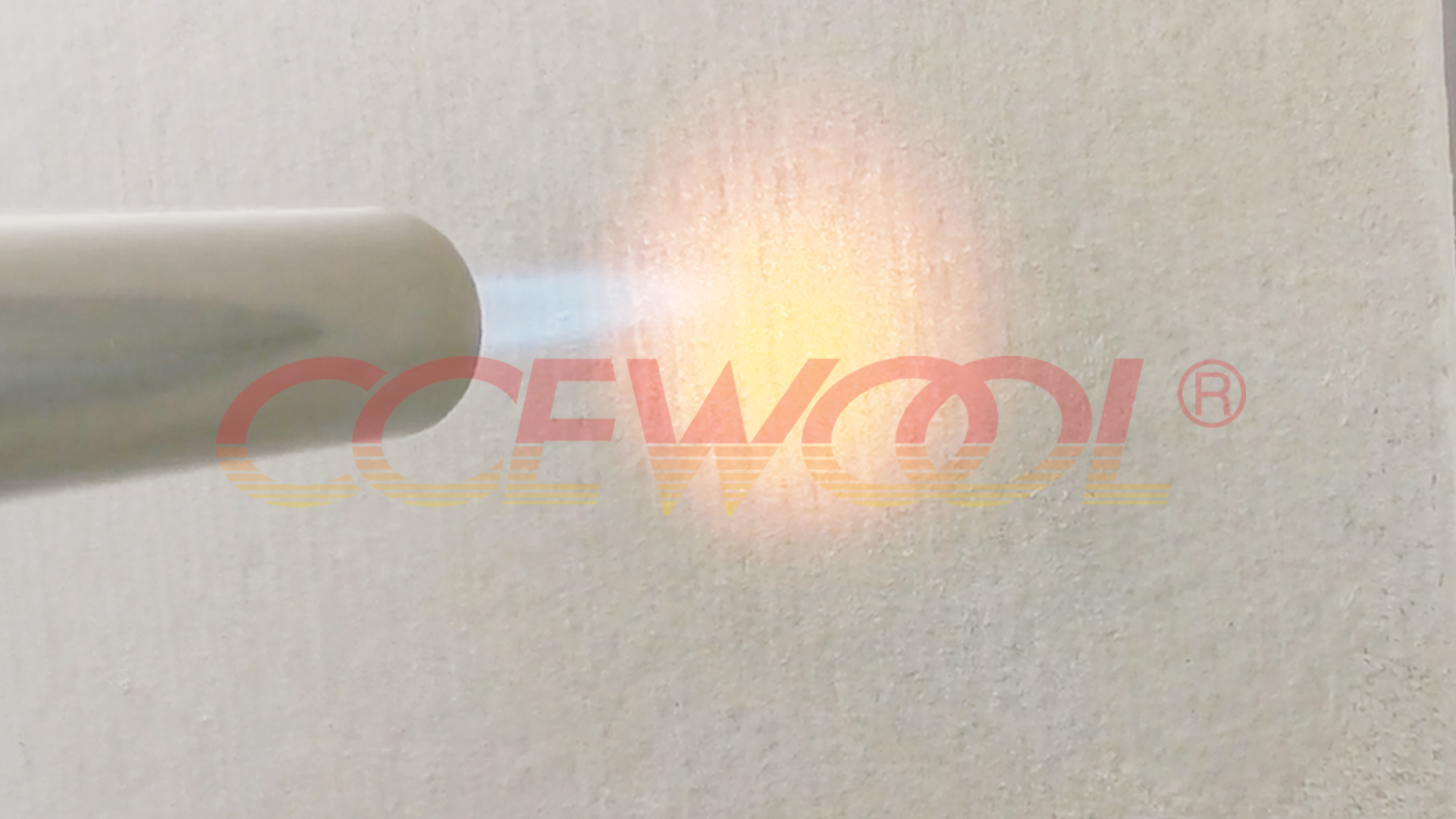
In glass melting furnaces and other high-temperature equipment, the back-up insulation layer is continuously exposed to harsh alkaline atmospheres during long operation cycles, along with frequent thermal cycling due to furnace start-ups and shutdowns. Traditional organic-bonded refractory ceramic fiber boards often suffer from powdering, odor release, and binder carbonization and delamination in such conditions. These issues lead to structural loosening, increased heat loss, and even partial collapse of the back-up layer—ultimately affecting production stability and reducing lining lifespan.
Inorganic Bonding + Low Powdering + Odor-Free: A Cleaner, More Stable Solution with CCEWOOL® Inorganic Ceramic Fiber Board
CCEWOOL® Inorganic Ceramic Fiber Board is specially designed for back-up insulation in extreme high-temperature and corrosive environments. Manufactured with a completely inorganic formulation, the board contains no organic binders, and therefore produces no decomposition, smoke, or odor under high heat, and is non-carbonizing and non-powdering—effectively solving the common stability issues caused by binder breakdown in traditional boards.
The board features densely aligned fibers and uniform bonding, delivering superior thermal shock stability and consistent structural performance. It retains its shape and insulation efficiency over long-term use, making it especially suitable for sensitive areas such as glass furnace back-up linings and insulation zones prone to delamination.
Inorganic Technology + Low-Temperature Setting + High-Temperature Strengthening: A Cleaner Manufacturing Process for Refractory Ceramic Fiber Boards
The CCEWOOL® Inorganic Ceramic Fiber Board series is produced using a proprietary inorganic formulation process, combined with low-temperature forming and high-temperature curing. Without any use of organic binders, this process enables the board to achieve high structural strength and low impurity content. Supported by intelligent temperature control systems and anti-crack surface design, each board offers higher cleanliness, minimal shrinkage, and superior thermal stability, meeting the strict standards of the glass industry for high-temperature clean environments.
Reduced Alkaline Corrosion, Longer Lining Lifespan, More Stable Furnace Operation
In glass furnace applications, CCEWOOL® Inorganic refractory ceramic fiber board provides clean, inorganic insulation with excellent resistance to alkaline corrosion. It significantly enhances the durability of the back-up layer, reduces heat loss, and improves the overall thermal stability and maintenance cycle of the furnace insulation system. Customer feedback shows that after replacing traditional organic-bonded boards with CCEWOOL® Inorganic boards, structural stability improved notably, maintenance frequency decreased, and lining service life was extended by more than 20%.
As a global leader in high-temperature insulation materials, CCEWOOL® integrates its own fiber production, forming, process development, and quality control systems. We are committed to providing the glass industry with more stable, cleaner, and longer-lasting refractory ceramic fiber board products. Through continuous innovation, we are driving the adoption of inorganic insulation solutions in high-end glass equipment—helping customers achieve higher energy efficiency, lower maintenance, and more sustainable operations.


