
How to Make Ceramic Paper Gasket Last Longer?
- 15 Oct, 2025
- Industry
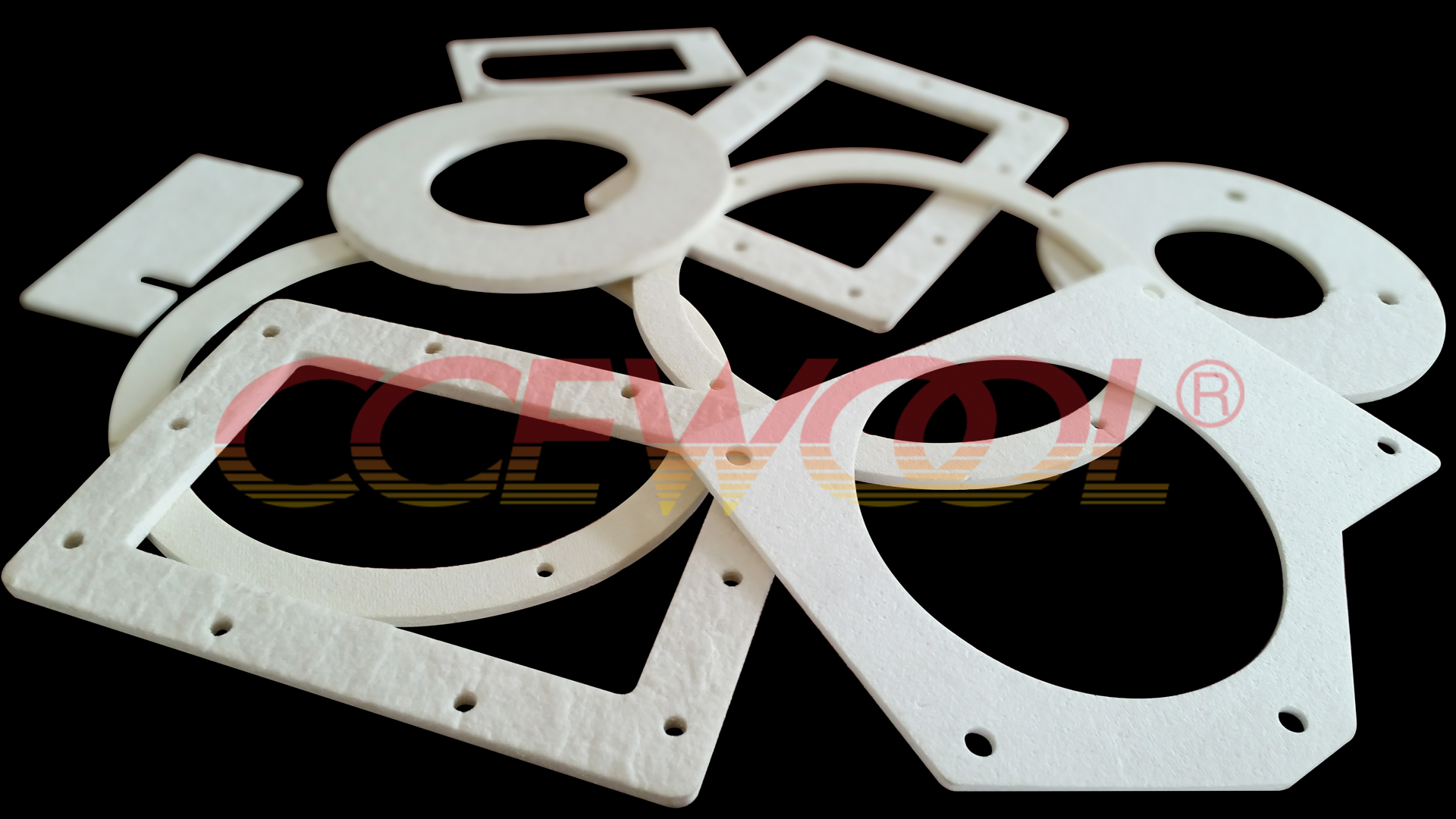
In high-temperature industrial applications, a ceramic paper gasket plays the dual role of sealing and insulation. It must not only operate stably for long periods at temperatures ranging from several hundred to over a thousand degrees Celsius, but also withstand mechanical stress and thermal shock during installation and operation. If tensile strength is insufficient, the gasket may tear during installation; if sealing performance is poor, gaps, leaks, or heat loss may occur during operation. These problems can cause insulation layer failure, increasing both energy consumption and maintenance costs. Therefore, tensile strength and sealing performance are the two key factors determining the service life of a ceramic paper gasket.
Strength Improvements Through Process Advantages
The advantages of CCEWOOL® ceramic paper gasket come from systematic optimization of our manufacturing process:
High-purity raw materials: Using alumina and silica as the main components, with impurity content strictly controlled below 1%. Fewer impurities mean fibers are more uniform and tough, reducing the risk of brittle fracture and fundamentally enhancing tensile strength.
Double-sided pressing and forming: During forming, the paper is processed with double-sided pressing, allowing fibers to interweave into a stable three-dimensional structure. This greatly improves tear resistance, ensuring the gasket can withstand stretching, folding, and wrapping during installation.
Support from intelligent manufacturing: Notably, CCEWOOL®’s self-developed “Ceramic Fiber Products Quality Traceability and Statistical Analysis Platform V1.0” also plays an important role in securing product performance. By monitoring process parameters in real time and analyzing quality data, the platform reduces the risk of performance fluctuations caused by uneven fiber distribution or inconsistent compaction. This ensures every batch of ceramic paper gasket maintains consistent tensile strength and sealing performance, minimizing the risk of failure at its source.
The Value of High Strength and Reliable Sealing
Thanks to advanced processes and strict quality control, CCEWOOL® ceramic paper gasket delivers clear advantages in practical applications:
Easier installation: High tensile strength prevents tearing during installation, reducing material waste and construction difficulty.
Reliable sealing: Dense structure ensures tight adhesion to equipment surfaces, preventing heat leakage or gas seepage and greatly improving insulation performance.
Longer service life: Remains intact under long-term high-temperature operation, without powdering or delaminating, effectively extending the service cycle of furnace linings or sealing systems.
Lower maintenance: Minimizes repairs caused by sealing failure or material damage, reducing unplanned downtime and cutting maintenance costs.
To make a ceramic paper gasket last longer, the key is to choose a product with both high tensile strength and excellent sealing performance. Through the combination of high-purity raw materials, precise forming processes, and intelligent manufacturing systems, CCEWOOL® ceramic paper gasket is engineered to be stronger, more stable, and more durable, providing reliable long-term sealing and insulation solutions for high-temperature industries.


