
How long does ceramic wool blanket last?
- 22 Oct, 2025
- Industry
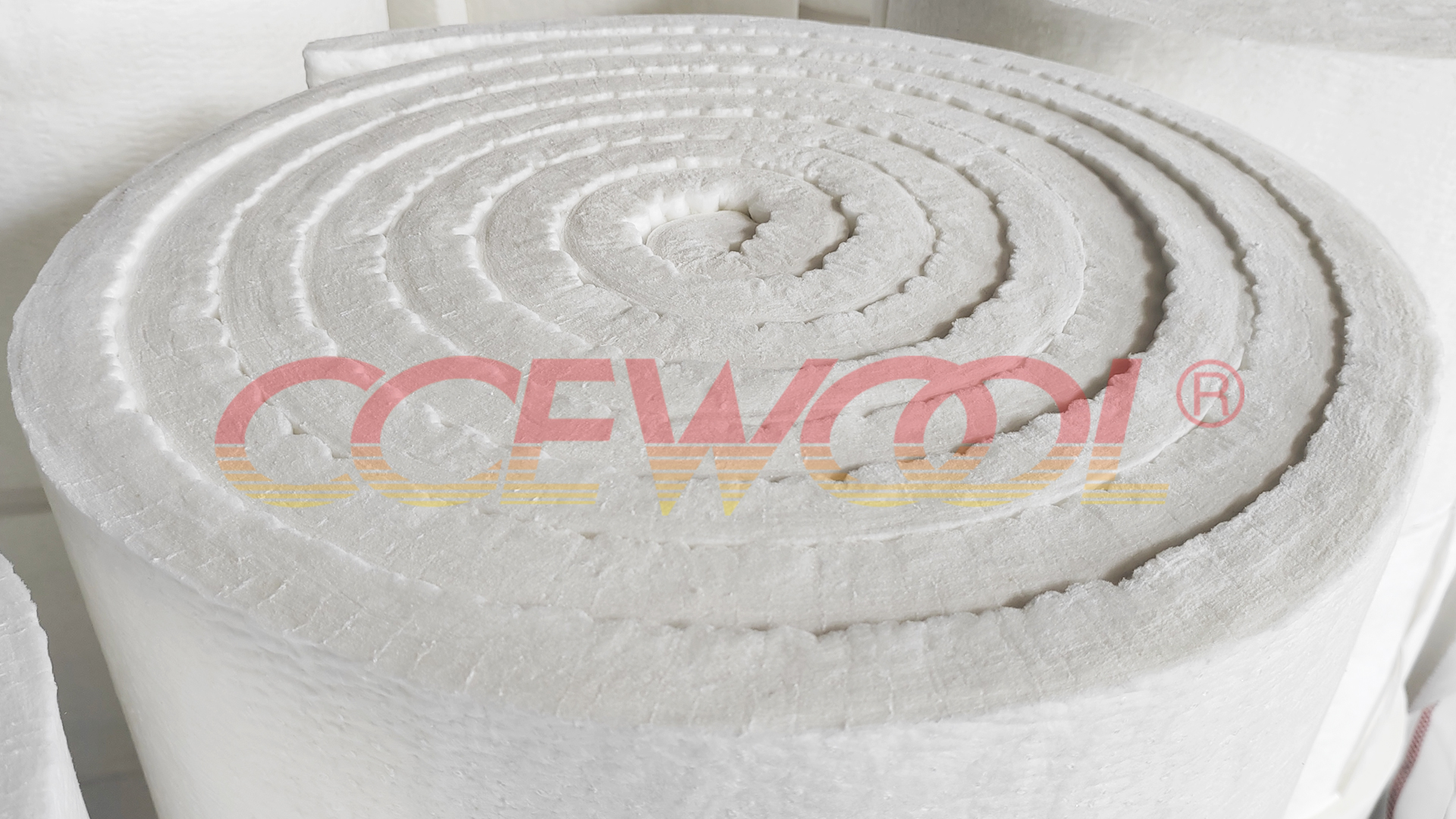
In the high-temperature industrial world, ceramic wool blankets are widely used in steelmaking, petrochemical, heat treatment, and power industries for their light weight, low thermal conductivity, and superior insulation performance. Yet one question remains crucial for engineers and operators alike: How long can a ceramic wool blanket actually last?
In reality, the lifespan of a ceramic insulation blanket depends not only on its material composition but also on the precision of its manufacturing process, the operating environment, and the quality of maintenance.
The Core of Longevity — High-Temperature Structural Stability
During long-term service, ceramic wool blankets often face aging issues such as powdering, shrinkage, and strength loss. These are typically caused by fiber crystallization, impurity reactions, and mechanical fatigue.
CCEWOOL® has fundamentally improved both materials and production techniques to ensure structural stability under extreme conditions:
High-purity raw materials: Selected alumina and silica with impurity content below 1% effectively suppress high-temperature crystallization and delay fiber embrittlement.
High-speed fiberization technology: Using 11,000 r/min centrifugal spinning after electric furnace melting ensures fine, uniform fibers that minimize localized overheating and microcracks.
Double-sided needling process: The interwoven three-dimensional structure provides superior tensile and thermal shock resistance, keeping the blanket intact and delamination-free through repeated heating and cooling cycles.
Intelligent Manufacturing for Consistent Long-Term Performance
CCEWOOL® incorporates its self-developed “Ceramic Fiber Product Quality Traceability and Statistical Analysis Platform V1.0” into every production line.
This system continuously monitors parameters such as fiber density, temperature, humidity, and needle depth, dynamically adjusting them in real time to prevent human deviation. Through continuous data analysis, the platform refines optimal production settings, ensuring uniform density and durability across every batch—and ultimately extending product service life.
Real-World Durability Performance
Thanks to its structural integrity and consistency, CCEWOOL® ceramic wool blanket demonstrates a service life well above industry averages:
Under continuous operation at 1000–1200 °C: lifespan reaches 5–8 years.
In cyclic thermal-shock furnaces (e.g., walking-beam or bell furnaces): lifespan remains 3–5 years.
As backup insulation layers: service life can exceed 10 years, as it experiences less direct thermal stress.
The lifespan of a ceramic wool blanket ultimately depends on its structural stability and manufacturing consistency at high temperatures.
By combining high-purity raw materials, precision fiberization, and intelligent quality management, CCEWOOL® ceramic wool blankets maintain exceptional performance over long-term operation—helping customers achieve fewer shutdowns, greater energy efficiency, and longer furnace life cycles.
So, when asked “How long does a ceramic wool blanket last?”, the answer is simple:
CCEWOOL® makes it last longer, perform better, and stay reliable.


